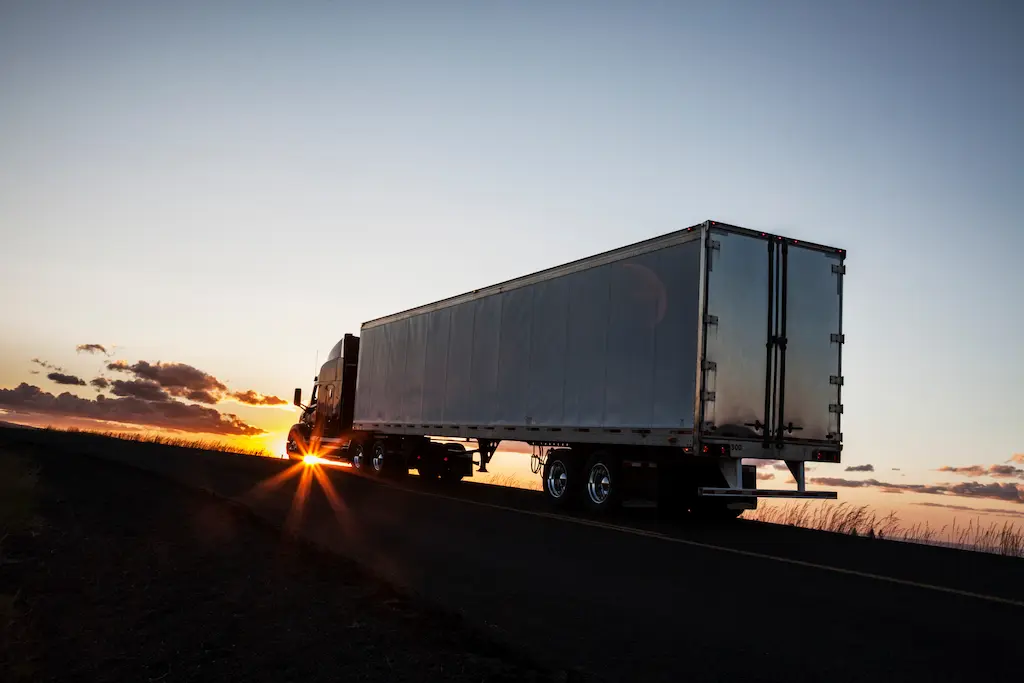
Safe Truck Stops in Europe
The shortage of truly safe truck stops has become one of the most vulnerable points in Europe's logistics chain, both for driver safety and for cargo protection. Despite the European Commission's efforts to define and fund Safe and Secure Truck Parking Areas, the available capacity remains far below the real needs of road freight transport.
At the same time, the rise of organized crime specializing in cargo theft has driven economic losses sharply higher, although without reaching the same level of concern seen in other regions, where risk management has become a basic requirement in logistics operations.

France, Germany, Sweden, and other key markets remain among the countries with the highest incidence of theft in unprotected parking lots, service areas, and industrial estates, accounting for millions of euros in annual losses.
For shippers, insurers, and carriers, choosing where a vehicle parks is no longer just an operational issue, but a strategic risk management decision that affects claims frequency, legal liability, and corporate reputation.
This article aims to bring clarity to the current situation of truck stops in Europe and the complexity logistics operators face when integrating safe stops into compliance policies and cargo loss prevention best practices.
Availability
Secure truck parking in Europe
Certified supply remains marginal compared with the scale of the European logistics operation.

Total capacity
380k
estimated truck parking spaces across the European Union.
Certified
4,943
spaces officially recognized as "Safe and Secure Truck Parking Areas."
Actual coverage
1–1.5%
of today's total existing capacity holds formal certification.
Security level at secure truck stops
Although the number of thefts at so-called Secure Parkings is significantly lower than at other stops, the truth is that it is still far from zero.
According to a European Commission study on Secure and Safe Parking Areas, the percentage of incidents falls from 85% to 41% among the reports associated with this type of stop.
In other words, there is no absolute guarantee: secure parking reduces risk, but does not eliminate it.
The cost of secure truck stops
The cost of spending the night at a secure truck stop ranges between €25 and €35, depending on the level of facilities.
Considering that the average freight value for transport within the European Community is around €2,000, the figure may seem small; however, the impact changes when the carrier's actual profitability is analyzed.
If the operating margin is close to 10% and one or more overnight stays are required, the use of these facilities can represent up to 25% of the trip's profit.
Secure truck stops and insurance
It is reasonable for insurers to recommend the use of secure truck stops, since they provide a greater safety margin for the cargo.
However, it cannot become a restrictive coverage requirement because the available supply remains extremely scarce in several critical corridors.
In any case, it may be required that overnight stays take place in a rest area specifically enabled for trucks, with lit zones and 24-hour services where available.
Practical case
Rotterdam–Madrid Route

To better understand the complexity of common transport routes in Europe, it is worth analyzing a frequent journey between two cities that requires several travel days.
This route crosses four countries — the Netherlands, Belgium, France, and Spain — with irregular availability of secure parking areas.
The Netherlands and Belgium
Good availability of secure parking in major logistics hubs such as Rotterdam and Antwerp.
France
Uneven coverage, with clusters in the north but long stretches with scarcity inland.
Spain
Secure parking concentrated in Catalonia, the Basque Country, and main corridors, but still very widely spaced.
Planning assumptions
Route parameters

Table 1: Basic parameters of the Rotterdam–Madrid route
European driving time regulations
According to Regulation (EC) No. 561/2006 and its amendments:
· Maximum daily driving: 9 hours (extendable to 10 hours twice a week)
· Mandatory break: 45 minutes after 4.5 hours of driving
· Regular daily rest: 11 hours (reducible to 9 hours three times a week)
· Weekly rest: At least 45 hours after six 24-hour periods
Parking selection criteria
To guarantee cargo security and driver rest, parking areas with the following characteristics are prioritized:
1. EU SSTPA certification or equivalent TAPA certification
2. Permanent 24/7 surveillance (on-site or video monitoring)
3. Access control (perimeter fence, barrier, entry log)
4. Adequate lighting throughout the entire area
5. Basic services (restrooms, showers, cafeteria)
6. Sufficient capacity to avoid nighttime rejection
Stop Plan: Proposed 3-Day Schedule
Day 1: Rotterdam → Northern France
Objective: Take advantage of the secure parking infrastructure at the Port of Rotterdam and cross Belgium to spend the night in northern France.

Recommended departure parking:
· Maasvlakte Plaza (Rotterdam): Secure truck parking with more than 560 spaces, 24/7 video surveillance, access control, and full services (restrooms, showers, restaurant)
· Managed by the Port of Rotterdam
· Ideal for port loading and unloading, and for departures toward continental Europe
Day 1 overnight parking:
Secure or monitored area on the A1 corridor between Lille and Arras. Northern France has several protected parking areas recognized in monitored parking databases for international transport.
Recommended intermediate break (4.5 h of driving):
Service area in Belgium (e.g. around Ghent or Tournai) to comply with the mandatory 45-minute break
Day 2: Northern France → Franco-Spanish Border
Objective: Travel south along the A1/A10 axis toward southwestern France, approaching the Spanish border, with an overnight stay in secure parking in the Bordeaux–Bayonne area.

Route considerations:
· The Paris bypass (Périphérique/A86) may experience heavy traffic; plan schedules outside peak hours where possible
· The A10 is a toll motorway with a good network of service areas every 40–50 km
· The Orleans–Bordeaux section may have limited availability of certified SSTPA parking, although standard service areas for short breaks do exist[7][8]
Day 2 overnight parking:
Secure/monitored parking on the Bordeaux–Bayonne–Irun axis. This area concentrates international traffic toward Spain and has monitored parking recognized by operators and specialized databases. It is a critical point for cargo security due to the concentration of trucks near the border.
Recommended intermediate breaks:
· First break (4.5 h): Service area on the A10 (e.g. Tours–Poitiers section)
· Optional second break: Around Bordeaux before the final stretch to Bayonne
Day 3: Spanish Border → Madrid
Objective: Complete the journey from the Franco-Spanish border to Madrid using the motorway network in northern Spain (AP-8/AP-1 or A-1).

Route considerations:
· The AP-1/A-1 is the main corridor for freight traffic between northern Spain and Madrid
· The Burgos and Aranda de Duero area has large service areas
· If a third overnight stay is required in Spain (due to delivery windows or accumulated weekly driving hours), there are monitored parking areas in the Basque Country, Navarre, and around Zaragoza/La Rioja
Recommended intermediate break:
Service area on the Burgos–Aranda de Duero corridor to comply with the 45-minute break after 4.5 hours of driving.
Alternative overnight stay in Spain (if necessary):
Monitored or SSTPA parking in the Basque Country, Navarre, La Rioja, or around Zaragoza, recognized by databases such as TAPA or specialized applications (TransParking, Trucker Apps).
Summary Table: 3-Day Plan

Operational Recommendations

For drivers
1. Advance planning: Reserve a space in secure parking areas whenever possible, especially during peak season or in high-demand zones
2. Schedule flexibility: Adjust departure times so that the end of the day (8–9 h of driving) matches the location of secure parking areas
3. Permanent communication: Inform the logistics control center of every stop and confirm the exact location
4. Recommended apps: Use specialized apps to locate secure parking areas in real time (TransParking, Trucker Apps, SNAP, Park4)
5. Visual inspection: Upon arrival at the parking area, check the fencing, lighting, and presence of surveillance before parking
For fleet managers
1. Standard procedure: Incorporate this plan as a reference for all Rotterdam–Madrid routes, with specific names of verified parking areas
2. Prioritizing high-value cargo: For high-value or high-risk loads, make the exclusive use of SSTPA or TAPA-certified parking mandatory for both overnight stays.
3. GPS monitoring: Verify that actual overnight stops match the planned parking areas.
4. Active monitoring: For high-value cargo, implement active monitoring to detect early warning signs of incidents and improve driver oversight.
5. Periodic updates: Review the availability and condition of secure parking areas every quarter, since the SSTPA network is still expanding
6. Driver training: Include secure parking selection criteria in ongoing driver training
Risk Management

Identified critical points
1. Central France section (A10): Limited availability of certified SSTPA parking between Orleans and Bordeaux.
2. Franco-Spanish border area: High concentration of trucks and greater risk of cargo theft in unmonitored parking areas[12]
3. Inland Spain: Long distances between secure parking areas on some stretches of the A-1[8]
Mitigation measures

Conclusions

As the practical case illustrated in this article shows, complying with European driving and rest time regulations requires complex planning.
Although professional carriers have extensive experience and a real commitment to cargo security, they remain exposed to contingent risks, detours, and unexpected disruptions.
This is where the insurance industry's contribution becomes valuable, not only from a financial standpoint in the event of potential losses, but also in supporting more effective risk management.
